It is likely that the overall SOC threat to the UK posed by organised crime groups taking advantage of, or overcoming, border controls has increased in 2025, driven by an increase in small boats, which is the principal organised immigration crime threat to this area, and an increase in sophistication and volume of drug imports in 2025 compared with 2024.
A range of SOC offending impacting on the UK has to transit the border, and there are similarities in modes of transit used for different types of SOC, including drug trafficking, the outbound movement of cash, human trafficking, and people smuggling. However, it is highly likely that these modes of offending are distinct, involving separate organised crime groups who are not heavily interrelated.
Smuggling of criminally-generated cash and listed assets across the UK border is carried out by individuals and networks often with the aim of concealing the illicit origins of the funds and placing them in a formal financial system overseas. This ensures that organised crime groups can continue funding the predicate criminal activity and also benefit from the profits.
The Sea Border | Small Boats
41,472 migrants arrived in the UK via small boats in 2025, a 13% increase on 2024 (36,816). This increase is highly likely enabled by organised crime groups adapting to improve profits; capitalising on an increase in demand from Horn of Africa migrants, widely adopting the taxi boat method, and increasing the number of passengers per boat. Use of other methods of organised immigration crime entry almost certainly either remained stable or decreased over the same period.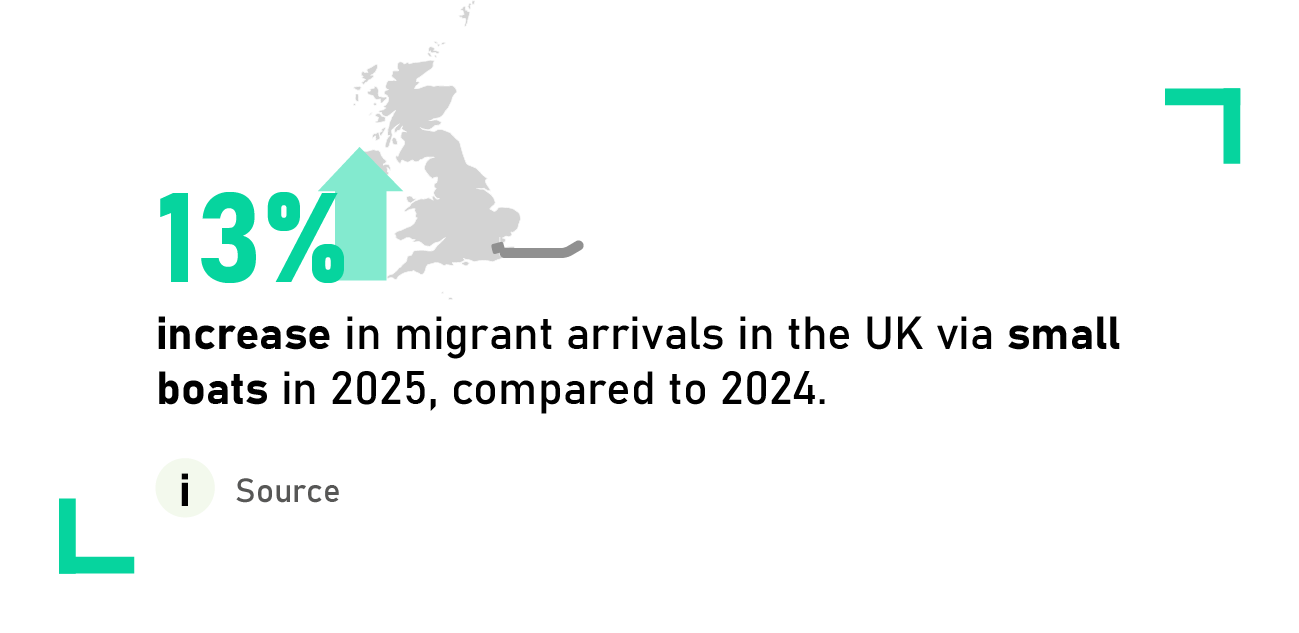
The most prominent migrant nationalities arriving in small boats in 2025 were Afghan, Eritrean, Iranian, Somali, and Sudanese. An increase in demand from Horn of Africa migrants was a key theme of 2025, and almost certainly driven by a combination of push factors from source countries (such as conflict and political instability) and secondary migration from mainland Europe.
In 2025, organised crime groups further evolved their launch tactics to avoid detection and capitalise on favourable crossing conditions. This included extensive use of the taxi boat method and overcrowding. The average number of passengers per boat reaching the UK was 62 in 2025, compared with 53 in 2024. This meant that the higher number of migrant arrivals was achieved with fewer small boats arriving in the UK in 2025 (672), compared with 2024 (695).
2025 saw fewer migrant fatalities in the English Channel (27) compared with 2024 (78), highly likely due to intervention by rescue craft, alongside fewer incidents of groups of non-paying passengers opportunistically storming boats in the water, causing panic and instances of crushing or drowning. In order to prevent opportunistic boarding, organised crime groups increasingly catered to lower-paying nationalities in 2025, almost certainly contributing to lower estimated average crossing prices compared with 2024.
It is highly likely that law enforcement activity has contributed towards an upwards trend in small boat equipment costs since 2023. The equipment used for small boat crossings is typically sourced from China and then assembled in Turkey, before being stored in Germany and transported to northern France. Organised crime groups almost certainly tested new supply routes in 2025 to avoid controls at the Bulgaria/Turkey border.
The Sea Border | Other Maritime SOC
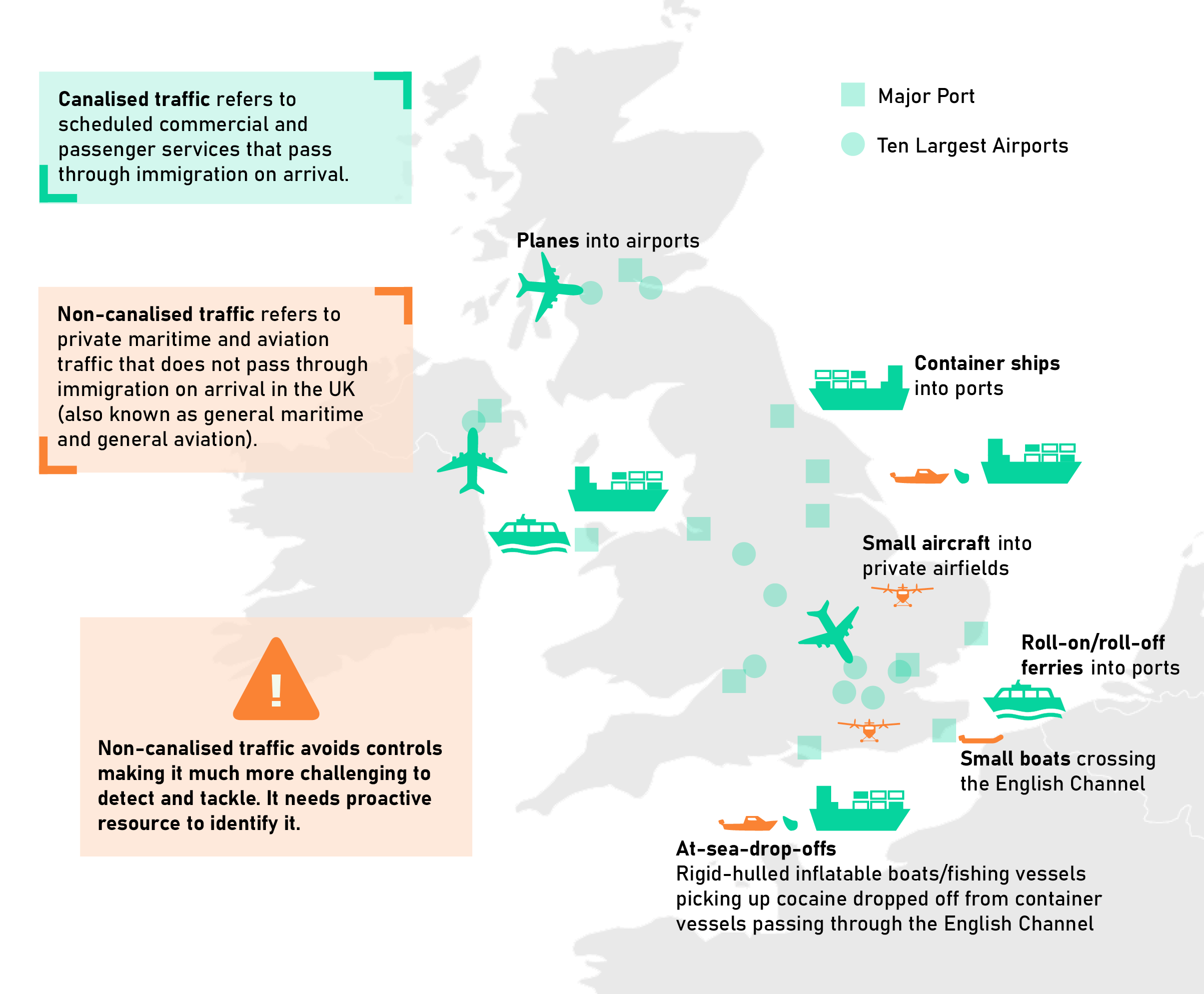
While it is highly likely that maritime threats to the UK on container shipping and roll-on/roll-off modes remained stable in 2025, it is highly likely that UK organised crime groups have enhanced at-sea cocaine exchange capabilities since 2023.
A small number of organised crime groups use general maritime vessels to smuggle cocaine, firearms, and people such as organised crime group members, associates, or those willing to pay more for passage, into the UK. People and commodities are highly unlikely to be smuggled in the same vessel.
It is highly likely that organised crime groups using the container shipping mode to smuggle cocaine have diversified their methodology. This includes using alternative European ports, enhanced concealments, and at-sea-drop-offs in response to high volumes of upstream seizures in recent years.
Confirmed illegality of some top-venting blank firers, which had previously been legally sold as being UK-specification, reduced firearms availability in 2025. This has likely contributed to established organised crime groups seeking to increase importations of firearms and ammunition; it is highly likely that organised crime groups favour tried and tested routes, modes, and methodologies.
It is likely that the threat to the UK sea border from clandestine irregular migration via roll-on/roll-off and general maritime reduced in 2025. Detections of irregular migrants at UK ports and in country continued a multi-year decrease in 2025. During 2025, there were 1,998 recorded detections of irregular arrivals to the UK at UK ports or subsequently detected in the UK, a 36% decrease compared to 2024, which saw 3,125. While the method is covert in nature and some events will go undetected, there is no indication numbers have increased.
It is highly likely that cocaine importations to the UK via at-sea-drop-offs or coopering are mainly organised by loose consortiums of transnational organised crime groups in joint ventures with South American brokers and suppliers. A joined-up operating model for cocaine shipments presents opportunities for organised crime groups to source, and resource, large-scale importations directly from South America.
The Air Border
 It is likely that the threat to the UK border from abuse of air routes, particularly from the importation of cannabis, increased in 2025. Overall seizures of cannabis in the year ending March 2025 totalled 127 tonnes, a 71% increase from the 74.2 tonnes seized the previous year, though levels of seizure stabilised through the rest of 2025. This cannabis is mainly from North America and Thailand and arrives in fast parcels and post, as well as air passenger and air freight modes.
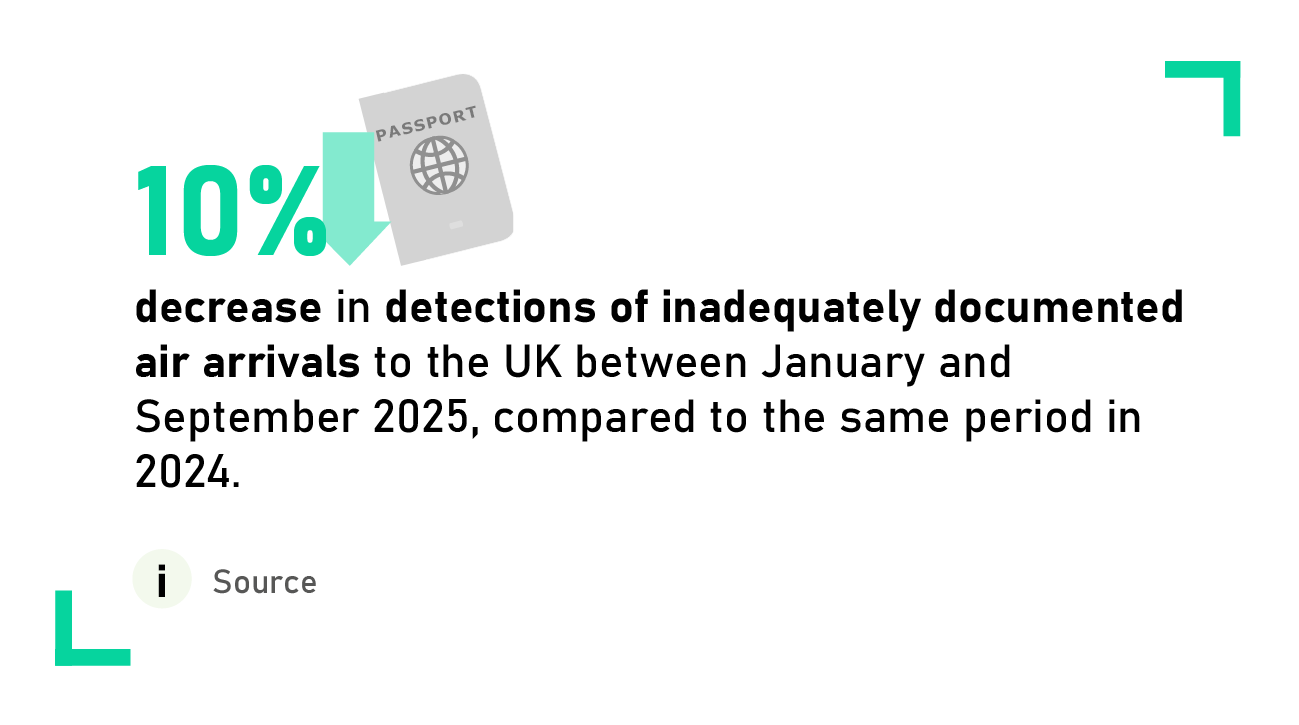
It is likely that the overall scale of irregular migration via air in 2025 is comparable to 2024. During 2025, there were 3,027 detected irregular arrivals to the UK via inadequately documented air arrivals, a decrease of 10% compared with 3,349 during 2024.
Case Study | Disrupting Firearms Trafficking
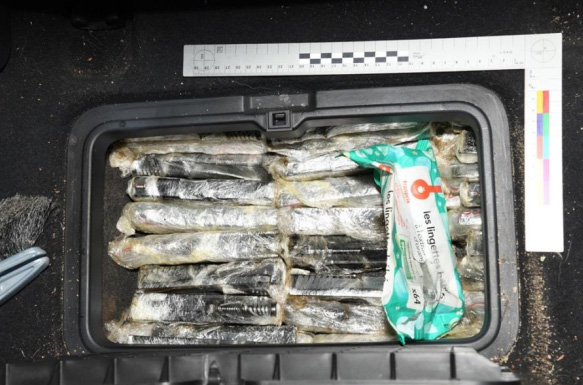 In May 2025, Border Force located 61 counterfeit firearms concealed beneath floor panelling of a vehicle (pictured) at the Port of Dover.
The driver, a 44-year-old Polish male, received a nine-year custodial sentence for attempting to smuggle the firearms into the UK in September.
Working together, the NCA and Border Force prevented this large quantity of firearms from entering the hands of organised crime groups, which would have strengthened their capability to inflict violence, intimidate communities, and undermine local resilience.
The Threat from Non-Canalised Traffic to the UK