SOC affects communities in many ways. As well as harming individuals, it also impacts local businesses and public services, and undermines the wider economy. It damages property and infrastructure and harms the natural environment. SOC erodes public trust in institutions and government services, making communities feel less safe and less resilient.
Some SOC offenders use a wide range of businesses on the high street including barber shops, mini-markets, nail bars, and vape shops, to support their criminality. These types of businesses are used to facilitate a range of SOC-related activities including selling or otherwise distributing illicit goods, illegal working, and the laundering of funds. Many individuals are supporting and enabling SOC in communities, usually unwittingly, by supporting these high street businesses.
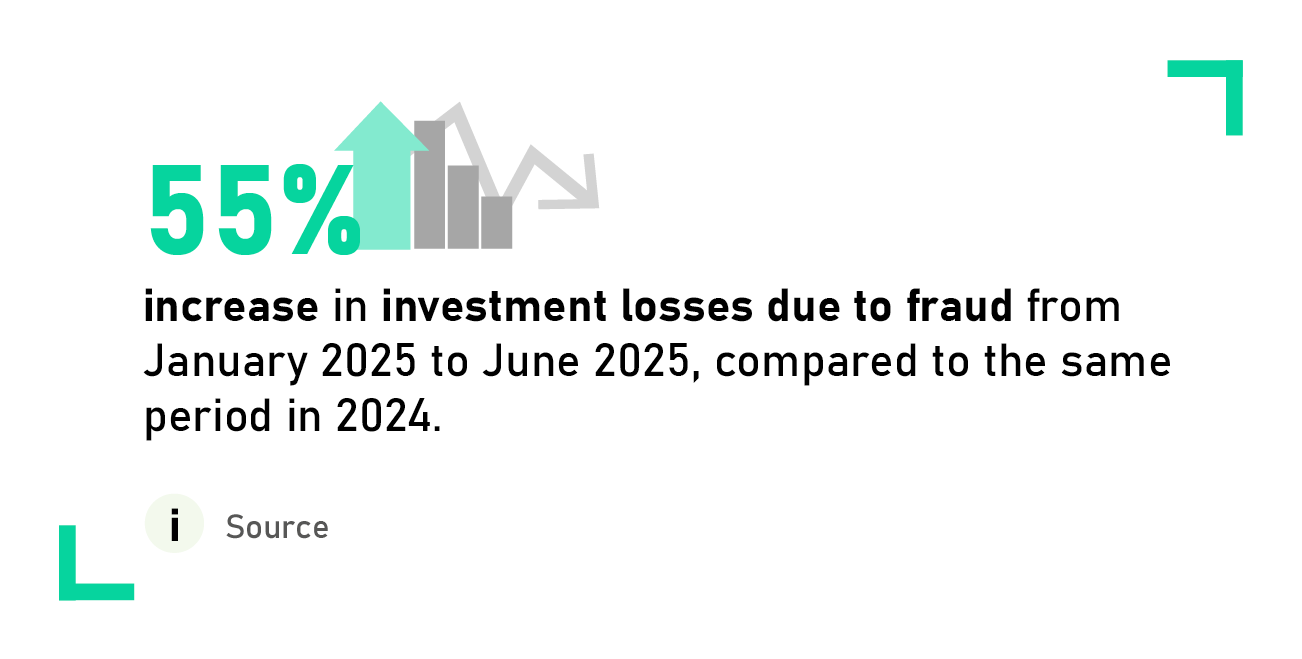 Fraud continues to have a substantial impact on the community, inflicting severe emotional and financial harm on victims, reducing economic output, and undermining government services. In addition to the personal harm caused, some types of fraud including online shopping fraud, ticket fraud, advance fee fraud, investment fraud, and rental frauds all have an impact on the wider community through lost economic output and reduced levels of investment. Although individuals aged 30 to 39 years old submitted the highest number of reports, the greatest financial losses were from victims aged 50 to 59.
Some frauds involve criminals offending from within community spaces, often targeting vulnerable individuals and organisations. For instance, courier fraud involving bank cards or jewellery is often enabled by urban street gangs who move these assets, in exchange for cash, to fund personal drug consumption.
Public sector fraud continues to act as a drain on additional investment in government and community services. In 2023 to 2024, the total tax gap was estimated by HM Revenue and Customs to be £46.8 billion, with the share of the gap due to criminality being 9% (£4.4 billion). Additionally, the Department for Work and Pensions reported £6.5 billion in fraud losses over the financial year ending 2025.
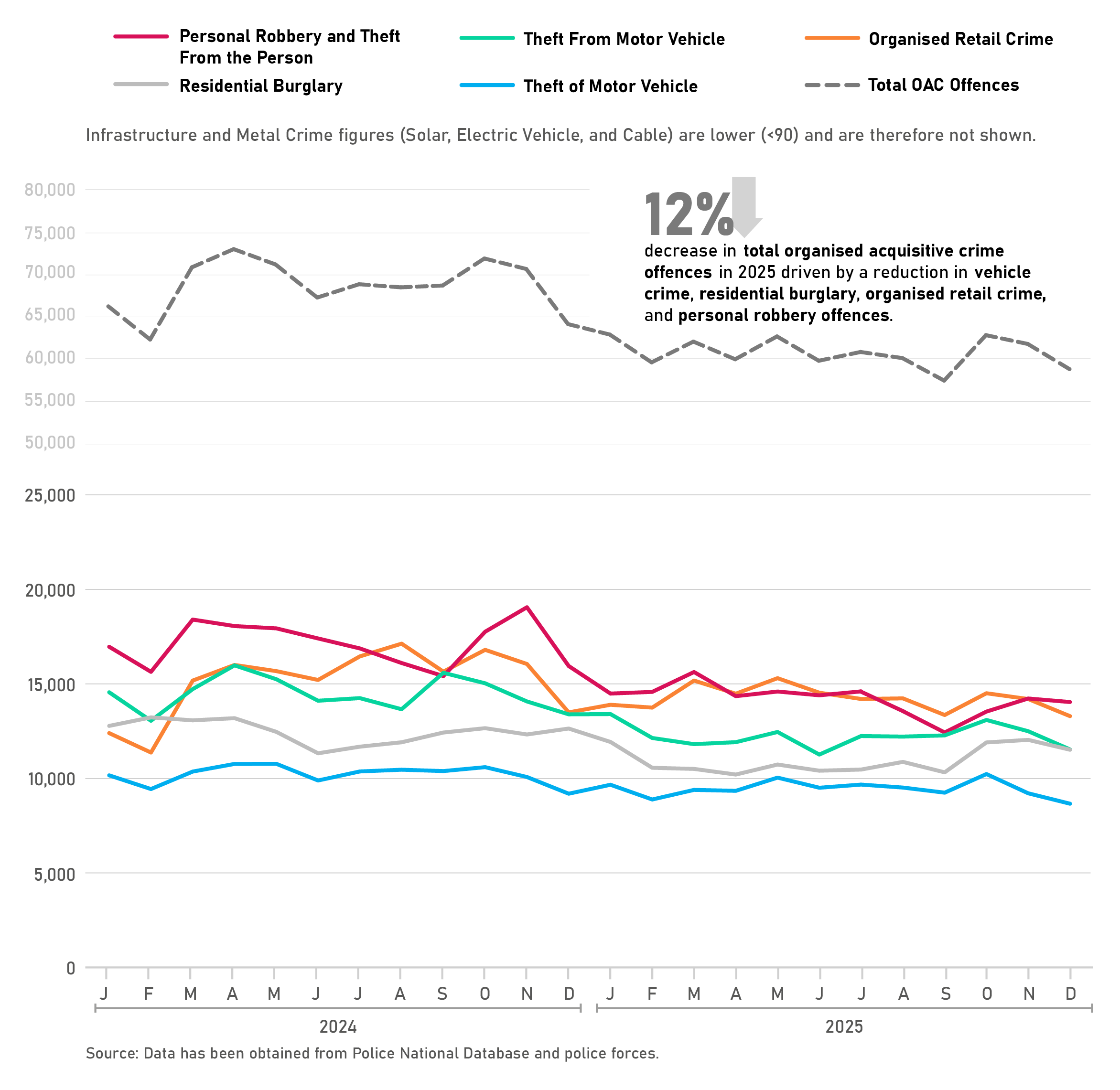
Organised acquisitive crime continues to undermine the safety and confidence of our communities. However, there was a 12% reduction in overall acquisitive crime offences in December 2025 (731,136) compared with 2024 (831,498), driven by decreases in organised retail crime, personal robbery, residential burglary, and vehicle crime offences. It is highly likely the response from law enforcement agencies and partners contributed to this reduction. Organised retail crime has also shown signs of stabilisation following a sharp increase in offences at the start of 2024.
The increase in renewable energy infrastructure requiring use of valuable materials, especially copper, is almost certainly driving acquisitive crime in this sector. Solar farms, wind turbines, and electric vehicle charging cables were all targeted by organised crime groups in 2025.
Organised crime groups engage in many types of waste crime, including illegal dumping, illegal waste exports, fraud, the operating of illegal waste sites, and tax-related offences. Organised crime groups involved in the waste sector are highly likely to be engaged in multiple additional crime types, including drugs and money laundering. More widely, the production, transport, disposal, and associated payments within waste management services are themselves a means for laundering the proceeds of crime.
Wildlife crime also remains a persistent threat: the UK has links to global smuggling networks associated with the illegal trade of parrots, reptiles, glass eels, birds of prey, and other CITES species.
SOC and Prisons
The imprisonment of offenders contributes to public safety by removing high-risk individuals from communities and supporting their rehabilitation. However, some SOC offenders continue influencing or directing criminal activity from within prison through illicit communications, corrupt staff, and associates operating in the community. Some offenders also likely increase their criminal capability while in prison by forming connections with more experienced individuals. These relationships provide networking opportunities and enable the exchange of knowledge and expertise.
The overall SOC threat within the prison system is likely to have remained broadly stable in 2025. However, the use of drones for smuggling contraband such as drugs, mobile phones, and weapons continues to be a growing threat to the safety and security of prison estates. Increases in reported drone incidents are likely due to cheaper and increasingly commercially available drone models, and heightened awareness of this tactic.
SOC nominals almost certainly play a role in illicit drug supply within prisons, driving addiction and sustaining a criminal economy that can lead to violence and extortion. Prisoners with a drug addiction often reoffend after leaving prison. There continues to be a significant threat from psychoactive substances, especially synthetic cannabinoid receptor agonists, entering the prison establishment. Smaller quantities of these substances are required, making them easier to conceal.
Rival organised crime group members are almost certainly involved in acts of violence and retaliation within UK prisons with incidents typically originating from drug-related disputes or gang-based grievances. Disputes in the community are known to impact on the prison estate, often in relation to disputes relating to finances, drug supply, territory, or personal vendettas. Most incidents of prisoner-on-staff violence are not related to SOC activity; however, threats of violence towards prison officers or against their families is a commonly used method of corruption used by prisoners.
SOC and Social Cohesion
SOC creates fear and uncertainty in our communities which can undermine trust and confidence in UK law enforcement and other local institutions. It is likely that high-profile violent incidents and firearms threats, despite being relatively rare, attract disproportionate attention and create a heightened perception of danger within communities. The visibility of criminal activity associated with an increasing number of irregular small boat arrivals amplifies social tensions.
Domestic Bribery and Corruption
Criminal networks continue to use bribery and corruption to facilitate their activities, including the use of professional enablers in both the public and private sectors. The Home Office’s Economic Crime Survey 2024 found that 1 in 35 businesses with employees in the UK (3%) had encountered a bribery incident in the previous 12 months.
It is likely that one of the areas of the public sector most at risk of corruption is local government, although this could be partly due to local councils being one of the most visible and accessible sectors for corruption to be identified by the public and/or having mechanisms in place for corruption to be identified internally. Individuals working in other public sector roles, including government, law enforcement, prisons, logistics, and at the UK border, are also vulnerable to corruption, including targeting by organised crime groups. There are indications that other business sectors also hold a particular corruption risk but further insight and analysis is needed to fully understand the threat.
Insiders in UK and international organisations continue to be sought and used by cybercriminals to gain access to organisations to deploy ransomware or to engage in other cybercrime activities.
Case Study | Operation MACHINIZE | High Street SOC

During 2025, the NCA established Operation MACHINIZE, the largest operation of its kind, focused on illicit finance and grey economy activity linked to high street businesses.
Working in partnership with the National Police Chiefs’ Council across two intensifications, the operational response involved every UK police force and Regional Organised Crime Unit, Home Office Immigration Enforcement, Trading Standards, HM Revenue and Customs, and Companies House.
Over the two intensifications, the partnership delivered:
- 2,999 premises visited and raided
- 959 individuals arrested
- Freezing orders over bank accounts totalling more than £1 million
- 55 individuals questioned about their immigration status and 97 people safeguarded in relation to potential modern slavery
- Over £10.7 million of suspected criminal proceeds seized
- Over £2.7 million worth of illicit commodities destroyed
Organised Acquisitive Crime Offences by Crime Type