
The National Strategic Assessment is split into three main sections:
Overview of SOC | Summarises key issues across the SOC domains, explains how the threats have changed, and the future of SOC.
Domains | Provides more detail on each SOC domain. See menu for links to domains.
Tackling the Threat | Shows how the NCA and partners responded to the SOC threat in 2025.
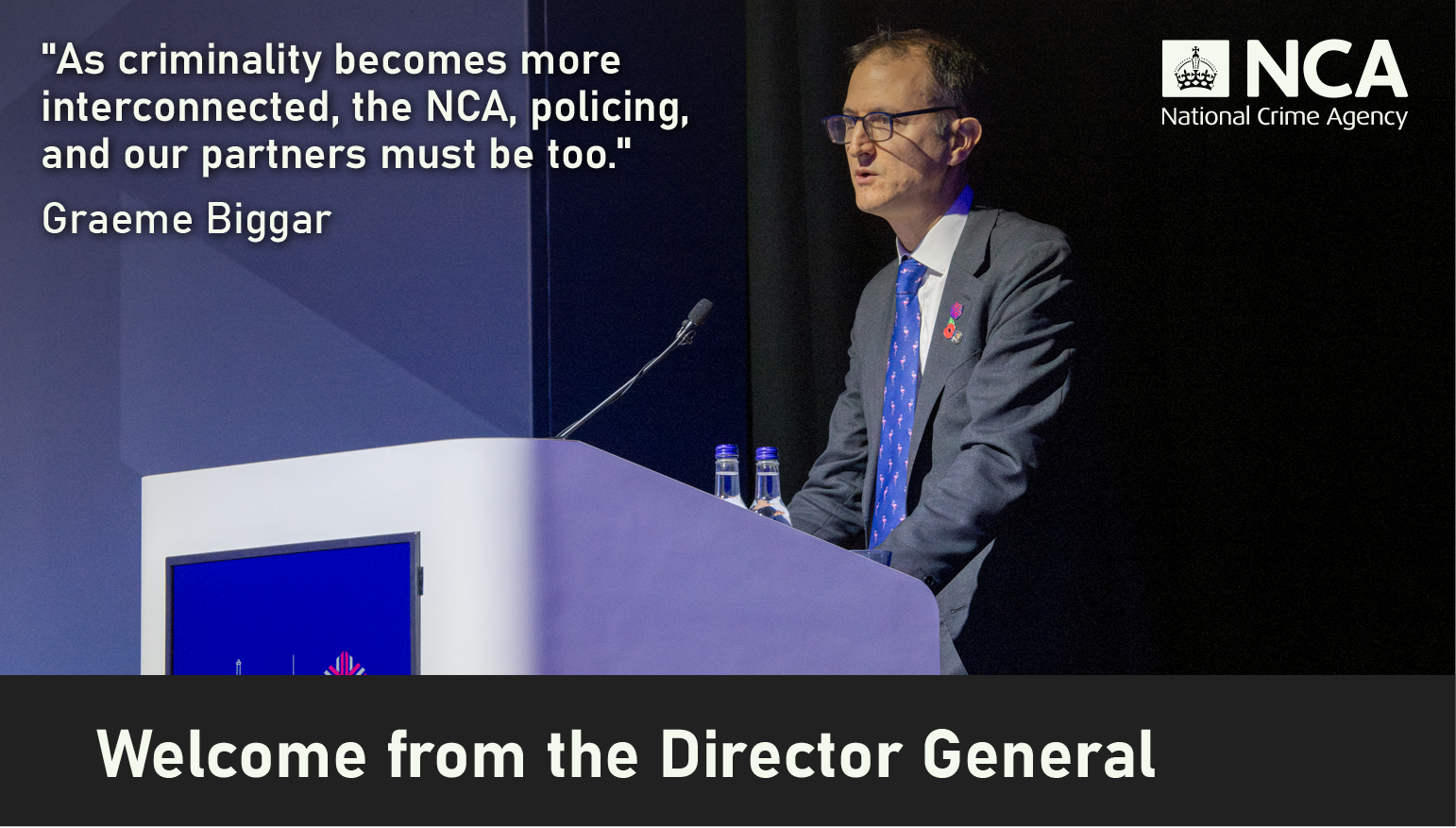
Serious and organised crime (SOC) continues to present a profound threat to the UK. Its corrosive impact is felt nationally, in our institutions and economy, and locally, in the safety, confidence, and resilience of communities across the country. To combat it, we need to understand it, and that is the point of this 2026 National Strategic Assessment.
We have changed the structure of the assessment this year from a threat focus to looking at domains: within communities, at the border, transnationally, online, and within finance. The intent is to shine a different light on familiar challenges, expose how criminals exploit vulnerabilities across multiple spheres, and thus enrich our understanding of crime and how we can tackle it.
That domain focus has helped illuminate four cross-cutting trends: the technological transformation of SOC; the convergence, diversification, and expansion of criminal activity; the increasing impact on the UK of SOC exploitation of global instability and geopolitics; and, as a result, the increasing harm posed to society. Of these trends, the most notable has been technology. This year we assess technology is no longer just an enabler of SOC; it is driving a large-scale transformation in terms of its scale, sophistication, and resilience.
The consequence is that, overall, we assess that the SOC threat has increased in 2025 and – despite the excellent work of NCA officers, policing and our partners - is likely to do so again in the coming year.
It has not done so uniformly. Of the nine specific threats we assess, drugs remains the only one where both the threat and the harm have increased, driven by increased production, falling wholesale prices, rising consumption of a wider range of drugs, and a diversification of smuggling routes and methodologies.
The threat from organised immigration crime and illicit finance has also increased, reflecting higher demand, more organised facilitation, and rising criminal profits. Whilst the harms from cybercrime and fraud have escalated following several high-impact ransomware attacks and increasing romance investment frauds, both fuelled by online enablers and increasingly sophisticated social engineering.
The overall level of the remaining four threats - child sexual abuse, firearms, modern slavery and human trafficking, and organised acquisitive crime - has neither increased nor decreased.
Little of what is set out in this assessment applies uniquely to SOC. We see the same trends affect terrorism, state threats, violence against women and girls, and much other crime. And we see more links between these threats and SOC. This insight has informed the Government's decision to merge the NCA and Counter Terrorism Policing into a new National Police Service. As criminality becomes more interconnected, so must we. I am confident this assessment provides a foundation from which to do so, and I am grateful to all those who have contributed to it.
Graeme Biggar CBE
About the National Strategic Assessment
The National Strategic Assessment of Serious and Organised Crime (SOC) provides an annual assessment of the SOC threat in the UK. The emphasis in the report is on what changed in the SOC threat picture in 2025, rather than providing a baseline of all SOC threats.
Unlike previous National Strategic Assessments, this document moves away from presenting individual sections on each SOC threat to focus on five domains where SOC operates: UK communities, the border, transnational networks, online environments, and finance. By adopting this domain-based approach, the assessment captures cross-cutting vulnerabilities, mirrors offenders’ agile and threat-agnostic methods, and provides a holistic view of the overall threat to the UK.
The primary SOC threats considered in this paper are child sexual abuse, cybercrime, drugs, firearms, fraud, modern slavery and human trafficking, money laundering, organised acquisitive crime, and organised immigration crime. Serious and organised offending is not limited to these offence types and other forms of offending are also considered in this assessment.
The intelligence collection period for the National Strategic Assessment 2025 is January 2025 to December 2025; however, where available and relevant, data and intelligence up to and including March 2026 has been used.
It is not always possible to be certain of a development in the threat, so throughout the National Strategic Assessment the ‘probability yardstick’ (as defined by the Professional Head of Intelligence Assessment) has been used to ensure consistency across the different threats and themes when assessing probability.
The following defines the probability ranges considered when such language is used:

Acknowledgements
The National Strategic Assessment is compiled by the National Assessments Centre, the NCA’s centre for assessed intelligence reporting. We would like to acknowledge the support offered by many partners in the preparation of this assessment. Our partners include, but are not limited to:
- Law enforcement and criminal justice bodies, including the police forces of England and Wales, Police Scotland, Police Service of Northern Ireland, Border Force, the Crown Prosecution Service, HM Prison and Probation Service, HM Revenue and Customs, Immigration Enforcement, the National Ballistics Intelligence Service, and the Serious Fraud Office;
- UK intelligence community, including the National Cyber Security Centre;
- HM Government, including the Cabinet Office, Companies House, Foreign Commonwealth & Development Office, HM Treasury, Home Office, and the Office for National Statistics;
- Overseas law enforcement agencies and organisations;
- The academic, private, and third sectors, including research from universities, charities, non-governmental organisations, banks and other financial institutions, communication service providers, and technology companies;
- Regulatory and professional bodies such as the Financial Conduct Authority and Ofcom;
- Opal, the national police unit focused on the collation, coordination, and dissemination of intelligence relating to organised acquisitive crime.